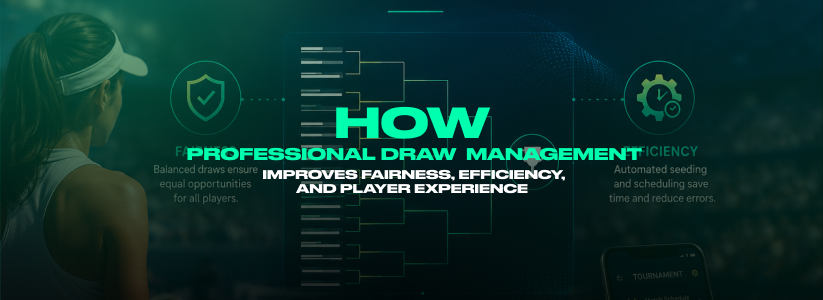
How Professional Draw Management Improves Fairness, Efficiency, and Player Experience

How Professional Draw Management Improves Fairness, Efficiency, and Player Experience

Ask any competitive player what they notice first about a well-run tournament, and it’s rarely the trophies or the courts — it’s the draw. A clean, fair bracket sets the tone for everything that follows. A messy one, riddled with seeding errors or last-minute reshuffles, tells players something is off before a single point is played.

Professional draw management has always been one of the least visible parts of running a tournament, and also one of the most consequential. Get it right, and the event feels credible and smooth. Get it wrong, and even great courts and prize money can’t undo the sense that something wasn’t handled properly.

Why the Draw Sets the Tone for Everything Else

A draw is more than a bracket of names — it’s a public statement about how seriously an event treats fairness. Seeding needs to reflect real ranking data, byes need to go where the rules say they should, and conflicts of interest, like clubmates meeting in round one, need to be caught before the draw is published, not after players start complaining.


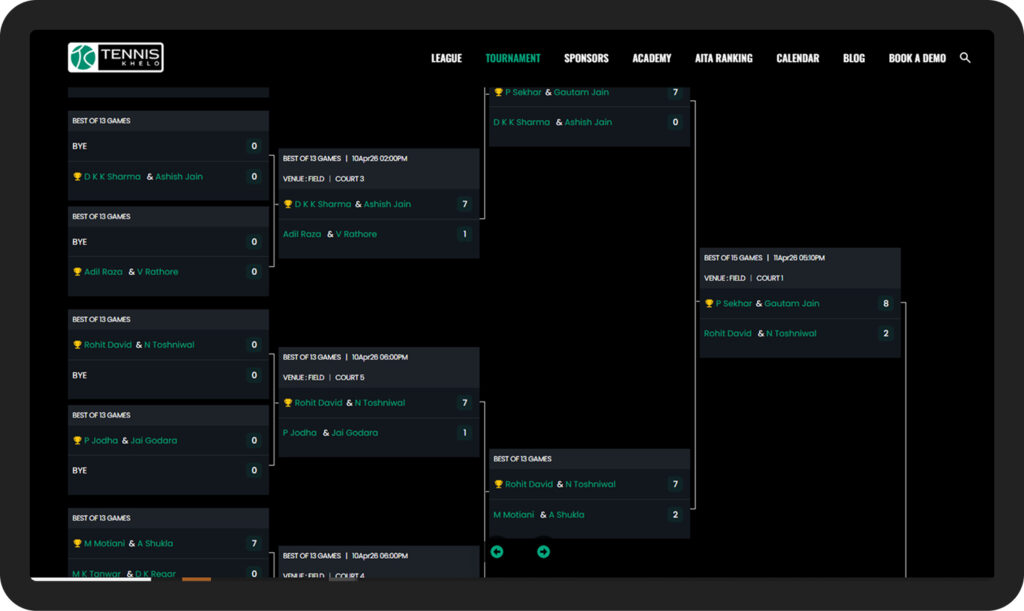
Inside a Modern Draw Management 

Modern Draw Management Software India

Fairness Built Into Every Bracket

  •     Consistent seeding rules applied identically to every player, with no on-the-fly exceptions
  •     Transparent bye allocation that players and coaches can actually understand
  •     Automatic conflict-of-interest checks that separate clubmates or siblings in early rounds
  •     A clear audit trail showing exactly how each draw was generated


Efficiency Gains You Can Actually Measure

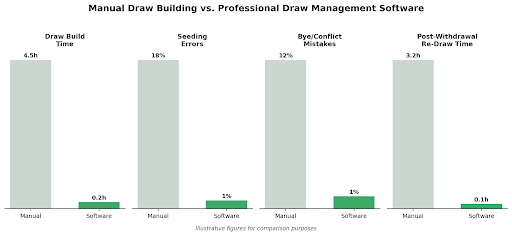
Manual draw creation doesn’t just risk fairness issues — it consumes enormous amounts of organizer time. Building a bracket by hand for a mid-sized tournament can take hours, and a single late withdrawal often means redoing large sections of that work. The comparison below illustrates how these tasks typically shift once a professional draw management tool takes over.

Manual Draw Building vs Professional Draw Management Software


A Side-by-Side Look

Draw Aspect Manual Process Draw Management Software
Seeding Manually ranked & placed Auto-applied from ranking data
Bye allocation Judgment call, hard to explain Rule-based and transparent
Conflict separation Easy to miss under time pressure Flagged and resolved automatically
Withdrawal handling Full manual re-draw Instant re-validation & publish


The Player Experience Payoff

Efficiency and fairness eventually show up as something players can feel: a smoother, more respectful tournament experience. When a draw is published on time, seeded correctly, and updated cleanly after any changes, players spend their energy preparing for matches instead of worrying about the bracket. Parents and coaches can plan travel with confidence, and officials spend less time fielding questions about why the draw looks the way it does.

A Standout Example

This is where dedicated platforms have made a real difference. Tenniskhelo stands out in this space for building draw management specifically around the needs of tennis events — automated seeding, clean bye handling, and instant draw updates the moment a withdrawal or change occurs. Rather than treating the draw as a static document printed once, Tenniskhelo treats it as a living structure that stays accurate as real-world changes happen, which is exactly what fairness and player trust depend on.

Why This Matters More Than It Seems

It’s tempting to think of draw management as an administrative detail, separate from the “real” tournament experience. In practice, it’s one of the clearest signals of how professionally an event is run. A fair, efficient draw doesn’t just prevent complaints — it actively builds the kind of reputation that makes players want to return next season.

Conclusion

Professional draw management sits quietly behind every well-regarded tournament, doing the unglamorous work of keeping things fair and moving smoothly. As more organizers adopt purpose-built tools instead of manual spreadsheets, the gap between well-run and poorly-run events will only become more obvious — and the players will be the first to notice which side of that gap an event falls on.

Share

Popular Posts