How clear, real-time communication and the right tournament software turn chaotic match days into smooth, player-friendly events
Walk into any tournament venue an hour before the first serve, and you will notice the same scene repeating itself: players hunting for a printed draw sheet pinned to a notice board, parents asking volunteers which court their child is playing on, and umpires shouting schedule changes across a crowded hallway. It is chaotic, it is avoidable, and it is exactly why tournament organisers everywhere are rethinking how they talk to the people who matter most — the players.
A tournament is, at its core, a logistics problem wrapped around a sporting event. Courts change, weather interferes, matches run long, and draws get updated at the last minute. When communication is left to word of mouth or a single notice board, small delays snowball into missed matches and frustrated participants. A smarter player communication strategy is no longer a nice-to-have; it is the backbone of a well-run tournament.
The Communication Gap That Slows Down Every Tournament
Most communication breakdowns happen not because organisers don’t care, but because the tools they rely on were never built for real-time updates. A printed schedule cannot be changed once it is pinned up. A WhatsApp group becomes unmanageable once fifty players are added. A public announcement system only reaches people standing near the speaker. The result is a communication gap between what the tournament organiser knows and what the player actually receives.
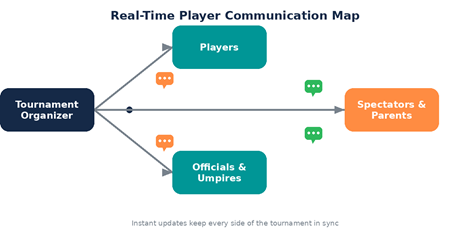
A clear communication map connects organisers, players, officials, and spectators in real time.
The Real Benefits of a Smarter Communication Strategy
When a tournament invests in structured, real-time communication, the benefits show up almost immediately, both on and off the court:
- Fewer walkovers and no-shows, because players receive court and time changes instantly instead of finding out too late.
- Reduced pressure on volunteers and front-desk staff, who no longer have to repeat the same schedule information all day.
- Higher player satisfaction, since athletes and parents feel informed rather than left guessing.
- Faster resolution of disputes, because match timings and draw updates are documented and time-stamped.
- A more professional image for the tournament brand, which matters for sponsorships and repeat participation.
Where Tournament Management Software Fits In
This is exactly the gap that modern tournament management software is designed to close. Instead of managing schedules on paper or across scattered chat groups, organisers can run the entire event — registrations, draws, court allocation, live scoring, and player messaging — from a single dashboard. Updates made by the organiser reach every player’s phone within seconds, and nobody has to physically check a notice board.
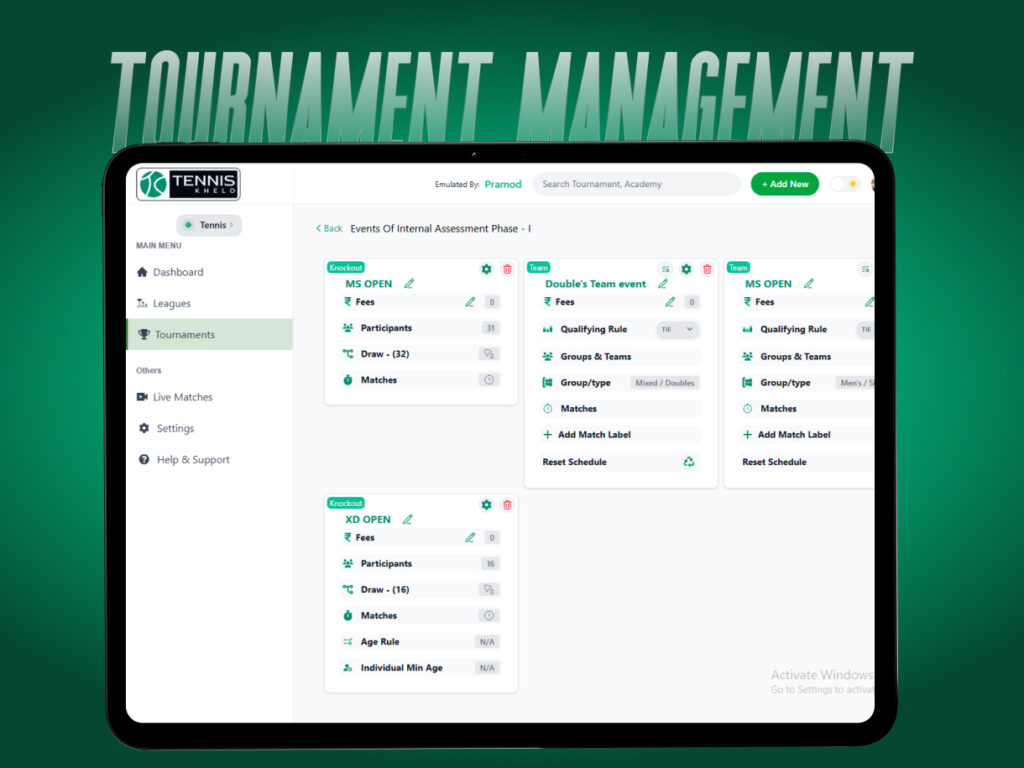
A tournament dashboard brings scheduling, messaging, and notifications together in one place.
Platforms built specifically for racquet sports, such as Tenniskhelo, show how this works in practice. By combining draw management, live scheduling, and instant player notifications in one app, this kind of software removes the guesswork from tournament day and lets organisers focus on running the event rather than answering the same question fifty times over.
Instant Alerts, Interactive Screens, and a Better Player Experience
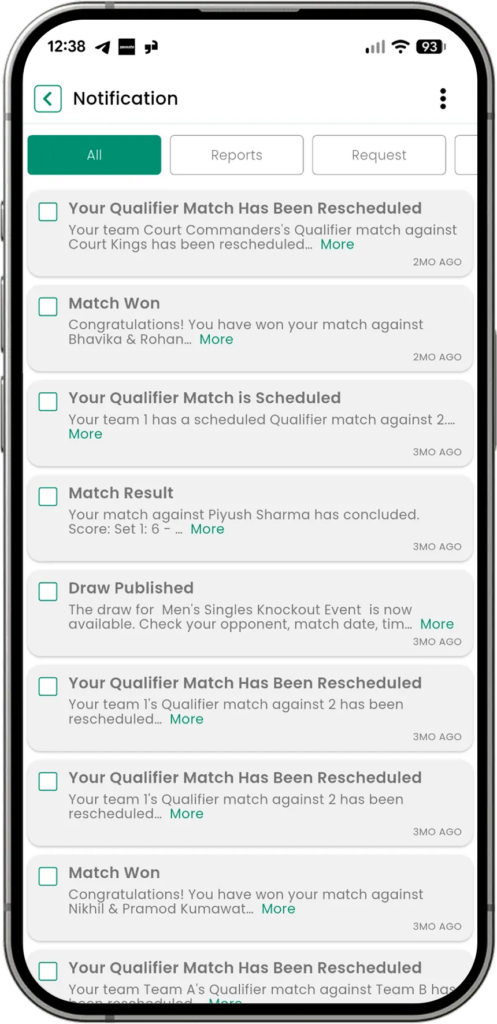 Beyond the organiser’s dashboard, the real impact of smarter communication is felt on the player’s own screen. A push notification about a rain delay, a reminder fifteen minutes before a match, or a live draw update turns a stressful wait into a manageable one. Interactive mobile alerts also reduce the anxiety of missing a call time, especially for junior players and their parents who are new to the tournament circuit.
Real-time mobile alerts keep players informed wherever they are on the venue.
Building Loyalty Through Better Communication
Tournaments that communicate well don’t just run smoother — they build a reputation. Players remember events where they were never left confused about court numbers or match timings, and that memory shapes whether they register again next season. In a sport calendar full of choices, a smooth, well-communicated event becomes a genuine competitive advantage for the organiser.
The Takeaway
A tournament’s success is measured not only by the quality of the matches but by how effortlessly players move through the day. Smarter player communication, backed by dependable tournament software, turns a logistically heavy event into an experience participants actually enjoy. As more organisers adopt real-time messaging and centralised scheduling tools, the printed notice board is quietly becoming a thing of the past — and tournaments are better for it.