

Why Live Scores Matter: The Key to Modern Tournament Success

Why Live Scores Matter: The Key to Modern Tournament Success

How real-time scoring turned a nice-to-have feature into a tournament essential

Not long ago, checking a tournament score meant walking over to a noticeboard, asking a volunteer, or waiting until someone posted results hours later. That gap between what happened on court and what fans, players, and parents actually knew has all but disappeared. Live score tracking is now one of the clearest signs of a well-run event, and live scoring tennis software has quietly become one of the most important tools in modern tournament management.

From Noticeboards to Real-Time Feeds

The shift toward live scores didn’t happen because it looked impressive — it happened because delayed information creates real friction. Parents waiting off-site want to know when to arrive for their child’s match. Tennis coaches managing multiple players need to track two courts at once. Sponsors want proof that people are actually engaging with the event they’re funding. A live feed solves all of this at once, replacing guesswork with a single source of truth.


It also changes how organizers themselves manage the event. Instead of fielding constant questions about scores and match status at the help desk, staff can point everyone to the live feed and focus on running the tournament itself rather than repeating updates all day.

A live scoreboard updates point by point, giving players and fans a real-time view of every match.

How the Data Actually Travels

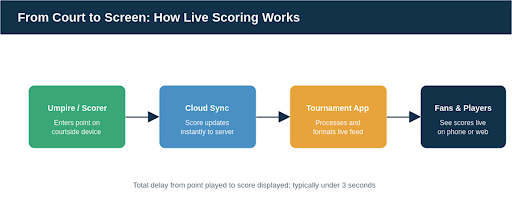
Behind a simple scoreboard is a fairly tight pipeline. An umpire or scorer enters each point on a courtside device, that update syncs to the cloud almost instantly, and the tournament app formats it into the live feed fans see on their phones. The entire journey, from point played to score displayed, typically takes just a couple of seconds.


This pipeline needs to hold up across dozens of simultaneous matches, not just one show court, which is why reliable live scoring is as much an infrastructure problem as it is a feature. A system that works smoothly on one court but buckles under ten running at once isn’t actually solving the problem organizers face.

live score work

The path from courtside entry to a fan’s screen — most systems complete this in under three seconds.

Why Live Scores Change Tournament Outcomes

1. Higher Fan and Parent Engagement

When people can follow a match without being physically present, they stay engaged longer and check back more often. This matters even more for multi-day tournaments, where most matches don’t happen on a main show court and would otherwise go completely unnoticed by anyone not standing courtside.

2. Better Player and Coach Planning

Players warming up for their next match can time their preparation accurately instead of guessing when a court will free up. Coaches overseeing multiple players across different courts can track progress from one screen rather than physically running between matches.

3. Stronger Sponsor Value

Sponsors increasingly expect measurable visibility, not just a banner on a fence. Live score pages with embedded branding give sponsors actual engagement data — page views, session time, and repeat visits — turning sponsorship into something that can be reported on rather than assumed.

Live score

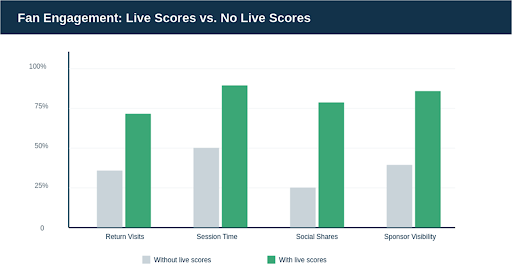
Tournaments with live scoring consistently see higher return visits, session time, and social sharing.

4. Fewer Disputes, More Transparency

A public, timestamped scoring record also reduces disputes about match results. When scores update transparently in real time, there’s a clear, shared reference point instead of relying on memory or a hastily written paper sheet after the match ends.

Where This Is Headed in Indian Tennis

Live scoring is increasingly expected rather than appreciated as a bonus, especially at AITA-ranked and academy-level events where players and parents already expect the same real-time experience they see in professional tennis broadcasts. Platforms like Tenniskhelo have built live scoring directly into their tournament management software, letting organizers offer real-time updates without needing a separate broadcasting setup or additional technical staff.

This matters most for academies and clubs running smaller, local events, since it lets them offer the same real-time experience as major tournaments without a dedicated broadcast team or a larger operations budget.


Even a modest local event benefits — a single live scores page, shared through a WhatsApp group or a QR code at the entrance, can replicate much of the experience players and parents now expect from bigger tournaments, at a fraction of the cost.

Final Thoughts

Live scores no longer feel like a premium add-on — they’ve become one of the baseline expectations of a well-run tournament. Organizers who invest in real-time tournament scoring aren’t just keeping fans informed; they’re building trust, improving player experience, and giving sponsors a reason to come back. In modern tennis, a tournament without live scores increasingly looks like it’s missing something essential — because it is.

Share

Popular Posts